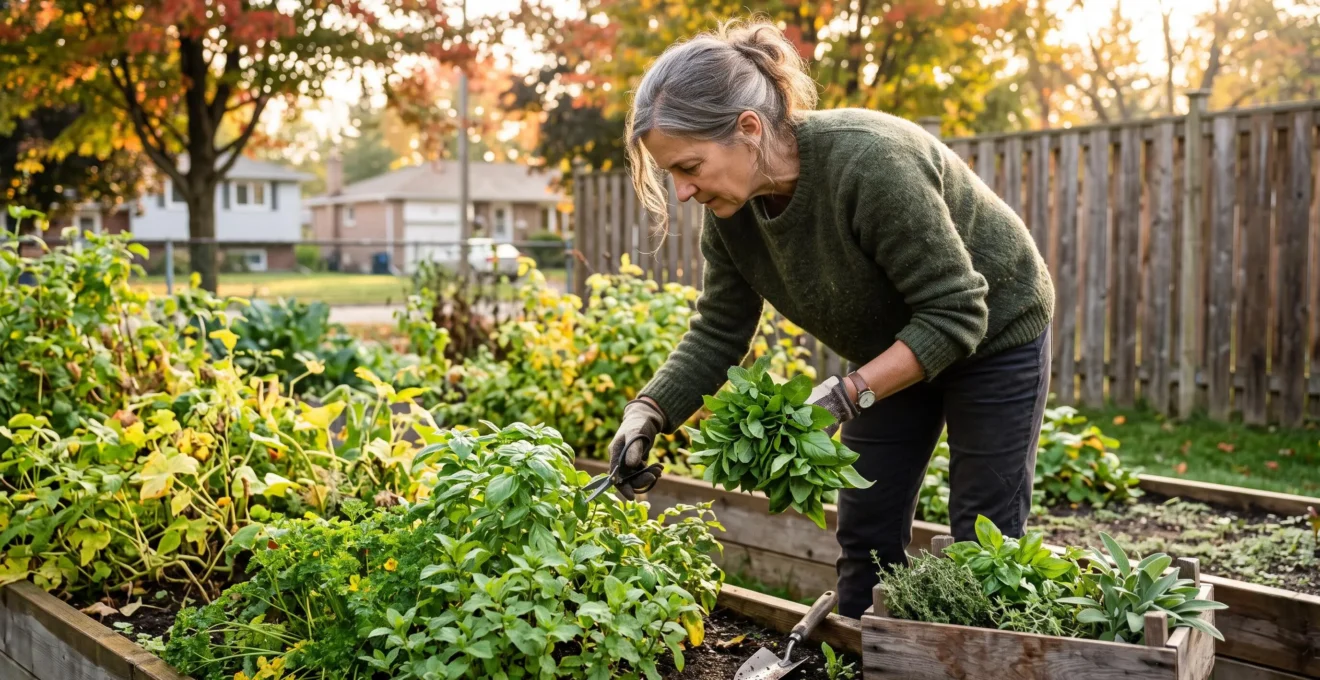
Herbs from the garden can enhance meals and several household activities throughout the year. Basil, mint, parsley, chives, and thyme offer a variety of possibilities: seasoning dishes, making culinary infusions, flavoring broths, or building up stores for winter. Using them does require paying attention to their growing needs, their fragility, and storage conditions.
In Canada, seasonal swings sometimes make caring for them harder. Winter days get shorter, temperatures drop, and the first frosts arrive at very different times depending on the region. A well-planned harvest, followed by suitable drying or freezing, makes it possible to enjoy homegrown herbs for longer.
A herb garden can also contribute to biodiversity when it includes native plants and species that benefit pollinators. The goal is to make the most of the harvests without neglecting food safety, plant identification, and the needs of local wildlife.
The essentials for using garden herbs
- Adapt growing conditions to each species: basil needs plenty of light and dislikes cold, while some perennial herbs cope better with Canadian seasons.
- Choose the preservation method according to the plant: freezing for parsley, careful drying for mint, and special precautions for preparations in oil.
- Harvest before the frosts, avoid poorly identified wild plants, and favor native plants to support biodiversity.
- Why does basil struggle to grow near a window in winter in Canada?
- How do you dry garden mint under good conditions?
- Freezing or drying: which method should you choose to preserve parsley?
- What risks come with using poorly identified wild plants?
- When should you harvest herbs before the first frosts?
- Native or exotic plants: which should you favor to attract birds?
- How can you vary your winter meals with storage vegetables and your dried herbs?
- How do you set up a biodiversity-friendly garden without excessive upkeep?
Why does basil struggle to grow near a window in winter in Canada?
Basil struggles to grow near a Canadian window in winter because it often lacks light and tolerates cold poorly. Even in a heated room, being close to the glass can expose its leaves to unfavorable temperatures. Supplemental horticultural lighting and a sheltered spot improve its growing conditions.
Common basil, Ocimum basilicum, is an annual herb that is sensitive to low temperatures. Native to warm regions, it does not have the same winter hardiness as some perennials grown in Canadian gardens.
A south-facing window may seem bright, but the amount of available light drops sharply during the short days of December and January. Clouds, neighboring buildings, and the distance of the foliage from the glass further reduce the light energy received.
According to the University of Minnesota’s horticultural fact sheet on growing basil, this plant generally needs six to eight hours of bright light per day. In winter, artificial lighting running 10 to 12 hours a day may be necessary when natural light is insufficient.
Basil that develops long, fragile stems with few leaves may be showing etiolation caused by a lack of light. Pale leaves or slowed growth should, however, also lead you to check watering, temperature, and the condition of the roots.
Proximity to windows poses a second problem. When the glass is cold, the foliage can suffer localized chilling despite a comfortable room temperature. The effect depends notably on the window’s insulation, the presence of drafts, and the position of the pot.
Before moving the plant for good, a few checks are useful:
- Observe whether the leaves touch the glass or sit in a cold draft.
- Check whether the pot rests on a particularly cold sill and, if necessary, use an insulating support.
- Move the plant slightly away from the glass without losing an excessive amount of light.
- Install a suitable grow light when winter brightness no longer allows satisfactory growth.
- Regularly inspect the undersides of the leaves for possible spider mites, sometimes called red spiders.
The heated air in homes can also become very dry. Monitoring the foliage and the moisture of the growing medium helps tell growing difficulties apart from pest problems. You should avoid systematically compensating for slow growth with extra watering, because constantly soggy soil can damage the roots.
Even with good lighting and a favorable temperature, an annual basil does not live forever. Planning for new plants and preserving part of the harvests is often a more practical solution than trying to keep the same plant going through the whole cold season.
How do you dry garden mint under good conditions?
To dry mint properly, harvest healthy leaves after the dew has disappeared, then place them in a dry, dark, ventilated spot. Drying flat is particularly worthwhile for this water-rich plant, because overly dense bundles risk molding. The leaves must be completely brittle before storage.
Mint keeps easily under certain conditions, but its moisture content calls for more vigilance than naturally drier herbs. Insufficient ventilation slows drying and can encourage mold inside the bundles.
The University of Saskatchewan’s recommendations for drying herbs state that mint is among the tender herbs likely to mold when dried in bundles. Laying the leaves out on clean trays, without overlapping, is therefore a relevant alternative.
To organize the harvest, favor leaves in good condition, with no signs of disease or decay. Preferably harvest early in the day, after the dew has gone and before the heat of the day. Harvesting before flowering can be worthwhile for a pronounced flavor.
Drying can then be done in two ways:
- Flat drying: spread the leaves in a thin layer on a clean, absorbent surface, in a ventilated room, away from direct sunlight.
- Drying in small bundles: hang the stems without tying them too tightly, only when air circulation and humidity levels allow efficient drying.
A dehydrator or an oven able to run at low temperature can also be used. The University of Saskatchewan indicates a range of about 35 to 46 °C for oven drying. Too much heat speeds up the loss of aromatic compounds and reduces the culinary value of the harvest.
The time required depends on the leaves’ initial moisture, the ventilation, and the method. It is better to check their condition than to follow a fixed time blindly. Properly dried leaves become brittle, and small stems snap rather than bend.
After drying, place the mint in an airtight container that is clean and perfectly dry. An opaque container, kept cool and away from light, helps preserve its quality. Properly dried herbs can generally be kept for up to a year, although their aromatic strength fades over time.
During the first few days, watch for any condensation, spots, or unusual odors. A weakened smell after several weeks may signal a loss of aromatic quality, but a good smell is not enough to guarantee the absence of contamination. If there is any mold, throw the batch out.
This method makes it possible to prepare stores for hot drinks, sauces, and various winter dishes. For some more delicate herbs, notably parsley, freezing is nevertheless worth considering first.
Freezing or drying: which method should you choose to preserve parsley?
Freezing is generally preferable for preserving parsley meant to flavor cooked dishes. It preserves its fresh character better than drying, even though the leaves soften after thawing. Drying remains possible if you want an herb that is easy to store, but its flavor is usually less pronounced.
Parsley is one of the tender herbs whose culinary value rests largely on the freshness of the leaves. Unlike thyme or rosemary, it often gives a less satisfying result when dehydrated.
The two methods therefore meet different needs. Freezing favors use in the kitchen, while drying allows storage without a freezer, provided enough moisture has been removed.
The following table helps you choose based on the intended use.
| Criterion | Freezing | Drying |
|---|---|---|
| Flavor | Generally keeps the fresh character better | Aroma often muted |
| Texture | Leaves soften after thawing | Dry, crumbly leaves |
| Use | Soups, sauces, and cooked dishes | Dry seasonings and simmered preparations |
| Storage | Freezer and suitable packaging | Airtight container, cool, dry, and in the dark |
| Indicative shelf life | 6 to 12 months depending on freezing conditions | Up to a year if drying is adequate |
To freeze parsley, start by discarding damaged parts, then wash the leaves and drain them. Chop them finely before dividing them into small portions. They can be placed in freezer containers or in ice cube trays with a little water.
The University of Saskatchewan’s fact sheet on freezing herbs confirms that parsley freezes particularly well and does not need to be blanched first. It also describes using ice cube trays containing water or vegetable oil.
Portions frozen in oil must stay in the freezer until use. They should not be considered shelf-stable at room temperature. For homemade preparations of herbs in oil kept in the refrigerator, special safety rules apply.
Healthy parsley stems can also be set aside separately to flavor broths or marinades. This use limits waste without requiring the same treatment for leaves and stems.
The best method ultimately depends on the dishes you prepare. For a soup or a hot sauce, frozen parsley works particularly well. For a dry spice blend, dehydrated parsley remains usable, as long as you accept a more subtle flavor.
What risks come with using poorly identified wild plants?
Using a poorly identified wild plant can cause poisoning, sometimes serious, when a toxic species is mistaken for an edible plant. In Canada, the diversity of natural environments makes approximate identifications particularly risky. A photograph, a pleasant smell, or a resemblance to a cultivated herb is never enough to establish that a plant is edible.
The main danger comes from resemblances between species. Some wild plants have leaves, flowers, or stems that recall those of plants traditionally eaten. Yet their properties can be very different.
One important example involves certain plants of the Apiaceae family. Edible species can resemble toxic ones, notably spotted water hemlock, found in North America. The latter must never be eaten.
It would be dangerous to offer an identification based solely on the shape of the leaves, the color of the stems, or the smell. These characteristics must be interpreted together by a competent person, taking into account the region and the plant’s stage of development.
Photographs available on the Internet often show a single moment of the growth cycle. A species photographed in full bloom can look very different in early spring. Young shoots are particularly hard to tell apart when the decisive botanical features are not yet visible.
A serious identification rests on several complementary checks:
- Observe the whole plant and its main botanical features, without limiting yourself to the leaves.
- Consult a botanical guide suited to the province or territory concerned.
- Compare the observed features with those of similar species, notably toxic ones.
- Have the identification confirmed by a qualified person or a competent naturalist group.
- Give up any consumption when the identification remains uncertain.
Contamination is another risk. A correctly identified plant may have grown in polluted soil, in an area treated with pesticides, or near a place exposed to contaminants. Roadsides, certain agricultural fields, and spaces that received unknown treatments call for particular vigilance.
Washing can remove some of the surface dirt, but does not guarantee the removal of substances absorbed into plant tissues. Botanical identification and the safety of the harvest site are two separate issues.
Herbs grown in a garden where the species and treatments are known offer more control. This traceability reduces several uncertainties, without removing the need to wash the harvests or discard damaged parts.
Caution must take priority over the urge to experiment. In case of suspected ingestion, you should quickly contact a poison control center or the appropriate emergency services, without waiting for symptoms to appear. For ordinary home harvests, it is best to favor cultivated, clearly identified species.
When should you harvest herbs before the first frosts?
Herbs that are sensitive to cold should be harvested before the first frosts forecast in their region. In Canada, this period varies widely with the local climate. Basil should be picked before the cold nights that could damage it, while perennials such as mint and chives can generally stay in place to regrow in spring.
There is no single harvest date valid for the whole of Canadian territory. Some northern or high-altitude regions see their first frosts as early as the end of summer, while milder areas of southern Ontario or British Columbia may wait until late fall.
Average first-frost dates provide a benchmark, but do not replace local weather forecasts. A frost can occur earlier or later than the yearly average. It is therefore best to check the forecasts regularly as the end of the season approaches.
For herbs meant for drying, a morning harvest after the dew has evaporated is particularly worthwhile. It avoids storing wet leaves and generally corresponds to a period favorable to aromatic quality. The concentration of aromatic compounds does, however, depend on the species, the weather, and the growth stage.
A gradual strategy limits losses:
- At the end of summer, take some of the stems that are well enough developed to start your stores.
- Monitor the frost forecasts specific to your locality.
- Make a final harvest of the sensitive annuals before a damaging cold spell.
- Leave enough foliage on the perennials that need to keep growing and rebuild their reserves.
- Sort, wash if necessary, then quickly dry or freeze the parts meant for preservation.
The distinction between annuals and perennials changes how the garden is managed. Basil is generally grown as an annual in Canada: it does not survive outdoor frosts. A complete harvest can therefore be justified when the end of the season approaches.
Mint and chives are perennials whose above-ground parts may die back or wither during winter, depending on local conditions. Their underground organs generally allow regrowth in spring when their hardiness matches the region’s climate.
Checklist for preparing harvests before frost
- Look up the average first-frost dates for your locality and write a monitoring period into the garden calendar.
- Identify the annuals and perennials you grow and draw up a list of plants to harvest fully or partially.
- Inspect the leaves and remove damaged parts so that the harvest batch consists only of healthy plants.
- Prepare the freezer containers and drying supports, then check that each batch has a suitable preservation method.
- Label the portions with the herb’s name and the preparation date to have identifiable stores for winter.
This organization makes it possible to enjoy the most delicate leaves before they deteriorate, while preserving the perennials that will stay in the garden. Once the harvests are safely stored, it becomes possible to think about the ecological role of the plants kept in the beds.
Native or exotic plants: which should you favor to attract birds?
Native plants suited to the region should generally be favored to attract birds to a Canadian garden. They provide fruit, seeds, shelter, and habitat for the insects that many birds feed to their young. Non-invasive exotic plants can complement the planting, but they do not replace all the ecological functions of local species.
The relationship between birds and vegetation is not limited to eating berries. Many bird species, including some that eat seeds as adults, look for insects to feed their chicks during the breeding season.
Native plants can host insects adapted to local plants. Their presence thus helps create a more complete food web than a garden made up solely of exotic ornamental species.
Several groups of plants deserve consideration depending on the region:
- Serviceberries: their fruit can be eaten by various bird species, and their flowering also interests certain insects.
- Native viburnums: their fruit and shrubby structure can contribute to wildlife food and shelter.
- Native perennial sunflowers: their flowers attract insects, while their seeds can interest seed-eating birds.
These examples are not a universal list. A species that is native in one province may be naturally absent from another. Its range, hardiness, mature size, and water needs should be checked with provincial botanical or horticultural resources.
Exotic herbs nevertheless retain a complementary value. Thyme and some other culinary plants can offer nectar to pollinators when allowed to flower. Their contribution should not, however, be equated with that of a diverse set of native plants hosting different insect communities.
The potentially invasive nature of certain species must also be considered. A plant sold for ornamental or culinary purposes can spread beyond its intended space. Regulations and recommendations on invasive exotic species vary by province.
In herb gardens, mint also illustrates the need to control the spread of vigorous plants. Growing it in a suitable container can help limit the spread of its rhizomes, even though this precaution does not resolve every risk associated with exotic species.
A good compromise is to reserve a large share of the garden for native shrubs, perennials, and ground covers, then to place the culinary herbs in areas that are easy to harvest and maintain.
A diverse garden offers more opportunities for food and refuge across the seasons. This diversity can be combined with a productive vegetable garden, where the harvested herbs are then used to refresh winter meals.
How can you vary your winter meals with storage vegetables and your dried herbs?
Storage vegetables and dried or frozen herbs make it possible to vary meals during the Canadian winter. Carrots, beets, squash, cabbage, and potatoes can be paired with mint, thyme, or parsley from the garden. Success rests on suitable storage for the vegetables and safe use of the herb preparations.
Storage vegetables have the advantage of being able to be kept beyond their harvest when they are healthy, properly prepared, and placed in appropriate conditions. They do not all need the same environment, however.
Potatoes should be kept in a dark, cool, ventilated space, notably to limit greening and deterioration. Storage squash generally prefers a drier and less cold environment than root vegetables. Carrots and beets usually need relatively high humidity to avoid drying out.
These differences make it useful to separate the produce according to its needs. Before storage, you should also remove specimens showing signs of rot or significant bruising, then regularly inspect the stores to remove those that are deteriorating.
Herbs then make it possible to turn the same vegetables into very different recipes:
- A carrot and potato soup enhanced with frozen parsley.
- Roasted beets served with a small amount of dried thyme.
- Oven-baked squash brightened with herbs preserved since fall.
- A cabbage soup enriched with parsley and other seasonings from your stores.
- A pesto made with garden herbs and frozen in portions suited to later use.
Dry blends can be put together ahead of time to simplify the preparation of simmered dishes. Frozen herbs are particularly handy when already divided into small portions: they can be added directly to a hot preparation.
One important precaution concerns homemade flavored oils. Unlike dried herbs kept alone in an airtight container, mixtures of herbs and oil can create conditions favorable to the growth of dangerous bacteria when poorly prepared or stored.
Health Canada’s advice on vegetables and herbs preserved in oil notably warns about the risk of botulism associated with certain homemade preparations.
For the homemade oils covered by these recommendations, Health Canada advises refrigerator storage at 4 °C or below, use within a week of making, and discarding leftovers. These preparations should never be stored at room temperature.
A contaminated oil can keep a normal appearance, smell, and taste. It is therefore impossible to confirm its safety by smelling or tasting it. Even with previously dried herbs, a homemade preparation should not be considered stable at room temperature without a validated preservation method.
Culinary variety does not necessarily depend on a large quantity of fresh vegetables bought every week. A well-sorted stock, portions of frozen herbs, and a few dry seasonings are enough to put together different meals, as long as the preservation requirements of each food are respected.
Key takeaways for reconciling harvests and biodiversity
- Keeping areas of native vegetation provides food resources and shelter for different animal species.
- Grouping plants by their water needs and controlling the spread of vigorous herbs makes upkeep easier.
- Observing the garden’s visitors across the seasons helps adapt the plantings without seeking a perfectly uniform layout.
How do you set up a biodiversity-friendly garden without excessive upkeep?
A biodiversity-friendly, low-maintenance garden relies on perennials suited to the local climate, a reduction of lawn areas, and soil protected by mulch. Herbs can find their place there if they are grouped according to their needs and if some of their flowers remain available to pollinators.
The first step is to observe the site before choosing species. Sun exposure, soil type, wet or dry areas, and the amount of space available largely determine future upkeep needs.
A plant suited to its location generally requires fewer corrective interventions than a species planted in conditions that do not suit it. Grouping plants with similar water needs also simplifies watering.
Native perennials are a good foundation for beds. Their selection must nevertheless take into account their real hardiness, their growth, water availability, and the characteristics of the site. Being native does not by itself guarantee that a plant will grow without upkeep in any garden.
Mulch helps limit the growth of some weeds and reduce water evaporation. A layer suited to the plants can be renewed when needed, without excessively covering the plants’ crowns.
Gradually reducing part of the lawn in favor of diversified beds can decrease the areas requiring regular mowing. This transformation takes an initial preparation effort, but it can make annual upkeep more targeted once the plantings are established.
Herbs fit easily into this organization. Thyme can find its place in a sunny, well-drained area, while mint should be planted where its spread remains manageable. Chives can be grown near areas of frequent harvest.
When some stems are left in flower, thyme, chives, and mint can provide resources to pollinating insects. It is therefore possible to harvest part of the leaves while keeping a few blooms, depending on the vigor of the plants and the gardener’s needs.
Ecological upkeep does not mean abandoning the garden. It rather consists of concentrating interventions on useful tasks: controlling invasive species, monitoring diseases, removing hazardous plants, and preserving the areas that serve as habitat for small wildlife.
Systematically raking up all the dead leaves can remove shelters used by certain insects. By leaving part of the plant litter in suitable areas, while clearing paths and places where buildup is a problem, the garden keeps more microhabitats.
Limiting pesticide use also helps preserve the insects that take part in biological balances. Prevention, the choice of suitable plants, and targeted interventions are preferable to systematic treatments.
To assess the results, observe the garden over the seasons: birds present, insects visiting the flowers, perennials’ regrowth, soil condition, and how often interventions are needed. These observations give more concrete indications than a simple comparison with a theoretical list of species to attract.
To get started, choose a small area of the garden, plant a few native perennials suited to the region, and keep an easily accessible spot for the herbs used in cooking. Note the watering needs, harvest dates, and visitors observed over one season. This information will let you gradually adjust the layout without needlessly multiplying upkeep tasks.
Can you grow herbs indoors all year in Canada?
Yes, some herbs can be grown indoors when their needs for light, temperature, and watering are met. In winter, basil may need supplemental horticultural lighting. Its lifespan nevertheless remains limited, even when its growing conditions are favorable.
Should you wash herbs before freezing them?
Yes. Herbs harvested from the garden can be contaminated by soil, water, or animals. Discard damaged parts, wash the leaves under potable water, and drain them thoroughly before packing them in small portions. Blanching is generally not necessary for herbs such as parsley.
How can you tell dried herbs that should no longer be used?
Signs of mold, lingering moisture, condensation in the container, or an unusual odor are reasons to throw out the herbs concerned. A drop in aromatic intensity can also indicate a loss of quality. The absence of visible signs does not, however, guarantee on its own the safety of all food preparations.
Can you store fresh basil or parsley directly in oil?
Homemade preparations containing herbs in oil require special precautions because of the risk of botulism. Health Canada recommends, for the homemade oils concerned, refrigerator storage at 4 °C or below and consumption within a week. They must not be stored at room temperature. Freezing in small portions is another possibility for herbs intended for cooking.
Do you have to cut off all the flowers on herbs to preserve their flavor?
No. Harvesting some herbs before they flower can favor their aromatic quality, but letting a few stems bloom can help pollinators. The best compromise depends on the species, the vigor of the plant, and the garden’s goal: culinary production, support for biodiversity, or a combination of both.